Blog / Richmond Honda Dealer

Take on Adventure in a 2021 Honda Ridgeline

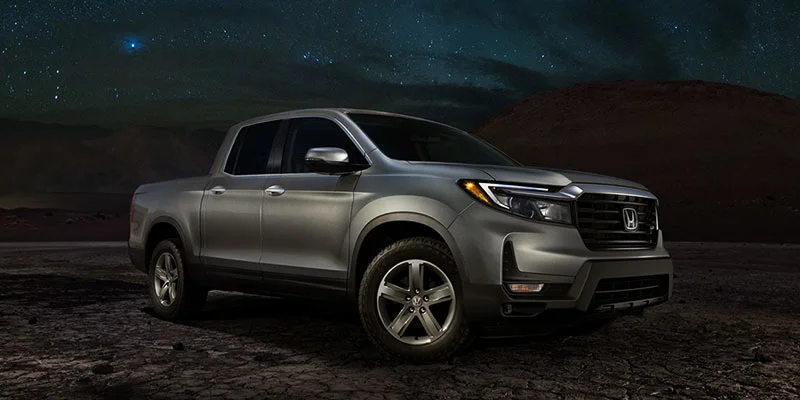
When you're ready to tackle challenging back roads, tow a boat to the lake, or zip up to the mountains for a ski trip, consider the exciting 2021 Honda Ridgeline midsize adventure truck. For 2021, Honda has redesigned this pickup truck with exterior touches such as dual exhaust ports.

Rugged Looks

Just looking at the front of the 2021 Honda Ridgeline makes you want to go on an adventure. Choose from four trims, the Sport, RTL, RTL-E, and the Black Edition to find your perfect Honda Ridgeline. You'll notice that the front of this truck has a square nose, upright grille, and large LED headlights that sit between the crossbar over the grille.

Foglights are integrated into the dropped fascia, adding to the rugged look of the Ridgeline. The Black Edition trim has black exterior trim and 18-inch black alloy wheels. Or you could make your 2021 Ridgeline stand out by choosing the new Radiant Red Metallic color.

Off-Road Capable

Under the hood of all trims is a 3.5-liter direct-injected VTEC V-6 engine that produces 280 horsepower and 262 pound-feet of torque. This mighty engine pairs with a nine-speed automatic transmission. You can take the 2021 Ridgeline over a variety of terrain with its innovative iVTM4 torque-vectoring all-wheel-drive system. This system sends most of the torque needed for traction or pulling power to the rear wheels. It's easy to switch driving modes with the Ridgeline's Intelligent Traction Management system that includes snow, sand, and mud modes. When properly equipped, the Honda Ridgeline can tow up to 5,000 pounds.

Flexible Storage System

One of the features that make the 2021 Ridgeline unique is its flexible storage system. All trims come with a dual-action tailgate, lockable in-bed trunk, and lay-flat truck bed that provides versatile and flexible ways to store and carry adventure toys such as kayaks or paddleboards.

Modern Interior

With two rows of seats, up to five people fit inside the 2021 Ridgeline. Cloth seats come standard on the base trim and you get leather upholstery, power-adjustable heated front seats, and a heated steering wheel on the three upper trims.

Innovative Technology

Honda's infotainment system features an 8-inch touch screen with Apple CarPlay and Android Auto integration. From the touch screen, you can control the truck bed audio system where you can listen to music from the rear of the truck. All trims come with automatic tri-zone climate control, and the three upper trims get a sunroof and power-sliding rear window. Move up to the RTL-E and Black Edition trims to get a wireless charging pad, navigation, and an eight-speaker premium audio system that's available on the two lower trims.

Honda Sensing Driver-Assist Features

You'll have peace of mind driving the 2021 Honda Ridgeline. All trims come equipped with Honda Sensing technology which includes blind-spot monitoring with rear cross-traffic alert, adaptive cruise control, lane-keep assist, and traffic sign recognition. In addition, the Ridgeline has a forward collision warning system with automatic emergency braking and automatic high-beam headlights.

Stop by Gates Honda, your local Honda dealership today to learn more about the 2021 Ridgeline and take one for a test drive in Richmond, KY.

Posted in:

Related Posts

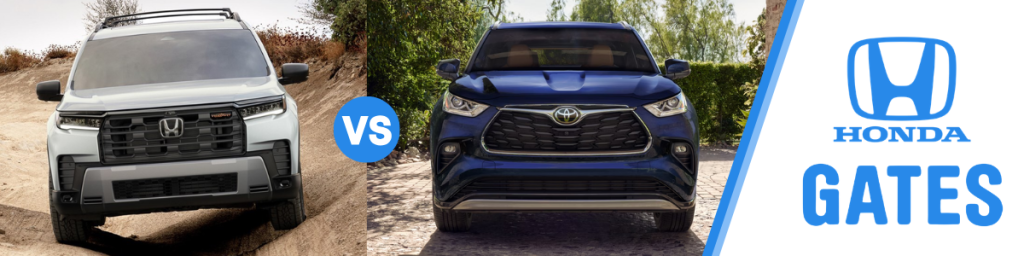
2026-Honda-Pilot-vs-Toyota-Highlander-Two-Family-Favorites-One-Clear-Winner

2026 Honda Pilot vs. Toyota Highlander: Two Family Favorites. One Clear Winner.

Two Family Haulers Go Head to Head for Your Garage Shopping for a three-row SUV that hauls the whole crew without feeling like a school bus? Honda and Toyota both build family rigs that land near the top of most shopping lists, and choosing between them comes down to what your household actually needs. This breakdown sorts out where each one wins. Honda's Pilot brings a 285 hp V6, standard seating for eight, and the most cargo room of the pair. Toyota's Highlander counters with a hybrid that hits 35 mpg combined, well past anything the Pilot can match. Honda's lower starting price and larger standard screens hand the Pilot an edge for budget-focused shoppers. How Much Room Do You Actually Get Both SUVs seat a full family, but the Pilot gives you more of nearly everything. It stretches about 200 inches long on a 113.8-inch wheelbase, while the Highlander measures roughly 195 inches on a 112.2-inch wheelbase. That gap shows up most in the cargo hold. Fold the Pilot's seats, and you open up as much as 113.7 cubic feet. The Highlander tops out around 84.3 cubic feet with everything flat. Seating tips Honda's way too. Every Pilot except the TrailSport carries eight people using a second-row bench, and that bench comes standard. The Toyota Highlander seats seven and charges extra for the eighth seat on select trims. For a big family or a carpool rotation, those details pile up quickly. Power, Towing, and How They Drive Pop the hood, and the two take different roads. Honda gives the Pilot a 3.5-liter V6 rated at 285 horsepower and 262 lb-ft of torque, paired with a 10-speed automatic. Front-wheel drive is standard, and Honda's i-VTM4 all-wheel drive is available on lower trims and standard from TrailSport up. Toyota drops the old V6 for a 2.4-liter turbo four making 265 horsepower and 310 lb-ft of torque through an eight-speed automatic. All-wheel drive now comes standard on every 2026 Highlander, so front-drive is no longer an option. That turbo trails the Pilot in horsepower but beats it in torque, which helps low-speed pulling. Both tow up to 5,000 pounds when you spec them right, so weekend boat and camper duty is a tie. Fuel Economy Where Toyota Pulls Ahead Give Toyota this round. Toyota's gas Highlander earns an EPA-estimated 24 mpg combined with its turbo four. Honda's V6 lands at 22 mpg combined with front-wheel drive and 21 with all-wheel drive. Then there's the Highlander Hybrid, which posts 35 mpg combined across its trims. Honda doesn't sell a hybrid Pilot, so if pump savings sit at the top of your list, the hybrid Toyota is hard to argue with. That trade runs the other way on power. Its V6 drinks regular gas and gives you stronger passing muscle with no battery pack to think about. Drivers who tow often or just like the shove of a bigger engine may happily swap a few mpg for it. Where the 2026 Honda Pilot vs. Toyota Highlander Really Splits Tech and money are where this 2026 Honda Pilot vs. Toyota Highlander race turns one-sided. Every Pilot now ships with a 12.3-inch touchscreen, a 10.2-inch digital driver display, and Google built in. Toyota's Highlander opens with a smaller 8-inch screen and a 7-inch gauge display, with the 12.3-inch upgrades saved for pricier trims. Price seals it. Honda's Pilot starts around $42,395 for a front-drive Sport, and you can add all-wheel drive when you want it. Because Toyota made AWD standard and cut the old base trim, the Highlander now starts at nearly $45,870. That's a few thousand more before you option a thing, and you get less standard screen for the money. Trim by Trim Comparison Chart Feature 2026 Honda Pilot 2026 Toyota Highlander Starting MSRP $42,395 (Sport, FWD) $45,870 (XLE, AWD standard) Standard Engine 3.5L V6 2.4L turbo 4-cylinder Horsepower 285 hp 265 hp Torque 262 lb-ft 310 lb-ft Transmission 10-speed automatic 8-speed automatic Drivetrain FWD standard, AWD available AWD standard Hybrid Option Not offered 2.5L hybrid, 243 hp, 35 mpg combined EPA Combined MPG (gas) 22 mpg FWD / 21 mpg AWD 24 mpg AWD Standard Seating 8 7 (8 available) Max Cargo Room Up to 113.7 cu ft Up to 84.3 cu ft Max Towing 5,000 lb (AWD) 5,000 lb (gas) Standard Touchscreen 12.3-inch 8.0-inch (12.3-inch available) Digital Driver Display 10.2-inch standard 7-inch (12.3-inch on Limited, Platinum) Basic Warranty 3 yr / 36,000 mi 3 yr / 36,000 mi Powertrain Warranty 5 yr / 60,000 mi 5 yr / 60,000 mi Honda Pilot Trim Starting MSRP Toyota Highlander Trim Starting MSRP Sport (FWD) $42,395 XLE (Gas) $45,870 Sport (AWD) $44,495 XSE (Gas) $47,940 EX-L (FWD) $44,695 Hybrid XLE $47,620 EX-L (AWD) $46,795 Limited (Gas) $50,325 TrailSport (AWD) $50,595 Hybrid Limited $52,075 Touring (AWD) $51,295 Platinum (Gas) $53,525 Touring Blackout (AWD) $52,495 Hybrid Platinum $55,275 Elite (AWD) $53,695 Black Edition (AWD) $55,195 Why the Pilot Earns the Nod Add it all up, and the Pilot takes the win for most families. It costs less to start, packs more standard tech, seats eight without an upcharge, and swallows more gear. Toyota's Highlander earns real respect for its hybrid and its stingy fuel numbers, and that counts for a lot if your commute runs long. For shoppers who want the most three-row SUV for the money right now, though, the Pilot makes the stronger case. See the 2026 Pilot Up Close at Gates Honda We've helped Central Kentucky families sort through three-row SUVs for generations, and we're happy to walk you through the 2026 Pilot in person. Stop by our Richmond showroom to sit in all three rows, fold the seats, and see how the cargo area handles strollers, sports gear, or a big grocery run. Our team knows every trim from Sport to Black Edition, so we can match the right one to your budget and the way you drive. When you're ready, we'll set up a test drive and let the Pilot speak for itself. Our Honda-certified service crew sticks with you for the long haul, too, keeping your Pilot in top shape long after you drive home.

Trail-Ready-or-Family-Ready-2026-Honda-Passport-vs-Pilot

Trail-Ready or Family-Ready? 2026 Honda Passport vs. Pilot

How the 2026 Honda Passport and Pilot Take Different Roads Two Honda SUVs share a showroom, a V6, and a strong family resemblance, yet they ask you one quick question before you ever turn the key. Do you want room for the whole crew, or grip for the rough stuff? That single answer sorts most shoppers in about thirty seconds. Both SUVs run the same 285-horsepower 3.5L V6 with a 10-speed automatic, so straight-line muscle is basically a wash. The Passport seats five and makes all-wheel drive standard, while the Pilot seats up to eight and starts with front-wheel drive. Pricing opens at $42,395 for the Pilot and $44,950 for the Passport, with both climbing into the mid-$50,000 range up top. One Engine, Two Personalities Pop the hood on either SUV, and you'll find the same heart. Both use a 3.5-liter V6 making 285 horsepower and 262 lb-ft of torque, bolted to a quiet-shifting 10-speed automatic. Towing maxes out at 5,000 pounds on both when properly equipped. The real difference comes down to how that power reaches the road. Every Passport ships with the second-generation i-VTM4 all-wheel-drive system standard. The Pilot is available in front-wheel drive on its Sport and EX-L trims, with AWD available for $2,100 and standard on the rest of the lineup. Five Seats or Eight Here's the biggest fork in the road. The Passport is a two-row, five-seat SUV built around hauling gear, not a third row of passengers. You get 44.0 cubic feet behind the second row and 83.8 with those seats folded flat. The Pilot adds a full third row, seating up to eight (or seven if you pick the TrailSport with its captain's chairs). Cargo runs 18.6 cubic feet behind the third row, 48.5 behind the second, and up to 113.7 with everything down. If your weekends involve kids, carpools, and grandparents, the Pilot's extra row earns its keep fast. Why the Passport Feels Like the Trail Truck Honda built the Passport to wander off the pavement. It rides on 8.3 inches of ground clearance with short bumper overhangs and a 23-degree approach angle. Step up to a TrailSport trim, and you get steel skid plates, 275/60R18 General Grabber all-terrain tires, bright orange recovery points, and seven drive modes, including Trail and Sand. The top TrailSport Elite throws in the TrailWatch multi-angle camera so you can pick a line over rocks without guessing. Anyone weighing the 2026 Honda Passport vs. Pilot for muddy two-track and gravel forest roads will feel the difference the first time the trail gets ugly. The Pilot Plays the Family Card The Pilot answers a different need. Its three rows, stowable second-row center seat, and clever in-trunk storage make daily family life simpler. Front-wheel-drive versions earn an EPA estimate of up to 22 mpg combined, a touch thriftier than the AWD-only Passport's 21 mpg combined. The Pilot also offers more trims, from the value-minded Sport to Touring, Elite, and the blacked-out Black Edition. There's even a Pilot TrailSport for buyers who want a third row and a taste of off-road hardware in one package. Picking a Trim Without Overpaying On the Passport side, the RTL covers the basics with standard AWD, heated seats, and a 12.3-inch touchscreen. The TrailSport trims are the ones to grab if dirt is part of your routine. For the Pilot, a Sport or EX-L gives families plenty of room and tech for the money, the TrailSport handles light trails, and Touring or Elite brings the leather, Bose audio, and head-up display for road-trip comfort. 2026 Honda Passport vs. Pilot Trim Comparison Feature 2026 Honda Passport 2026 Honda Pilot Body style Two-row midsize SUV Three-row midsize SUV Seating 5 7 (TrailSport) or 8 Standard drivetrain AWD on every trim FWD standard, AWD available or standard by trim Engine 3.5L V6 3.5L V6 Horsepower / Torque 285 hp / 262 lb-ft 285 hp / 262 lb-ft Transmission 10-speed automatic 10-speed automatic Max towing 5,000 lb 5,000 lb (AWD) / 3,500 lb (FWD) Ground clearance 8.3 in 7.3 in (8.3 in TrailSport) Cargo behind rear seats 44.0 cu ft (behind 2nd row) 18.6 cu ft (behind 3rd row) Max cargo 83.8 cu ft up to 113.7 cu ft EPA combined 21 mpg (20 TrailSport) up to 22 mpg (FWD) Trim lineup RTL, TrailSport, TrailSport Elite (plus Towing and Blackout variants) Sport, EX-L, TrailSport, Touring, Touring Blackout, Elite, Black Edition Starting MSRP $44,950 $42,395 2026 Honda Passport Trims Trim Drivetrain Seats What You Add EPA Combined Starting MSRP RTL AWD 5 12.3-inch touchscreen, heated front seats, tri-zone climate, power tailgate 21 mpg $44,950 RTL Towing AWD 5 RTL gear plus a factory-integrated Class III trailer hitch 21 mpg $45,650 RTL Blackout AWD 5 Gloss black wheels, black badges, and black lug nuts 21 mpg $46,150 TrailSport AWD 5 Steel skid plates, all-terrain tires, recovery points, panoramic moonroof 20 mpg $48,650 TrailSport Blackout AWD 5 TrailSport hardware paired with blackout exterior styling 20 mpg $49,850 TrailSport Elite AWD 5 Bose audio, TrailWatch cameras, ventilated front seats, heated steering wheel 20 mpg $52,650 TrailSport Elite Blackout AWD 5 Top Passport with every Elite feature plus blackout styling 20 mpg $53,850 2026 Honda Pilot Trims Trim Drivetrain Seats What You Add EPA Combined Starting MSRP Sport FWD (AWD +$2,100) 8 Cloth seats, 12.3-inch touchscreen, tri-zone climate, roof rails, power tailgate 22 mpg (FWD) $42,395 EX-L FWD (AWD +$2,100) 8 Leather-trimmed seats, wireless charger, driver memory, rear sunshades 22 mpg (FWD) $44,695 TrailSport AWD 7 Skid plates, all-terrain tires, full-size spare, captain's chairs, TrailWatch 20 mpg $50,595 Touring AWD 8 Bose audio, panoramic moonroof, hands-free power tailgate, surround-view camera 21 mpg $51,295 Touring Blackout AWD 8 Touring gear plus 20-inch black wheels and black badging 21 mpg $52,495 Elite AWD 8 Head-up display, ventilated front seats, heated 2nd row, rain-sensing wipers 21 mpg $53,695 Black Edition AWD 8 Range-topping luxury with black exterior trim and black leather interior 21 mpg $55,195 Starting prices exclude destination charges, so check with us for current numbers on the trim you want. Matching the Right Honda to Your Driveway The math here is pretty clean. Go with the Passport if your days lean toward gear, dogs, bikes, and trailheads, and you'd rather have grip and clearance than a third row. The Pilot makes more sense if you need seats for everyone and a big cargo hold for the school-run-meets-road-trip life. Both come with Honda Sensing safety tech, the same strong V6, and a 5,000-pound tow rating, so your choice really comes down to the life you're packing. Better yet, drive both back-to-back and let the seats and steering wheel make the call. See Both SUVs Side by Side at Gates Honda Reading specs only gets you so far, which is why we'd love to put you behind the wheel of both at Gates Honda in Richmond. Our team can walk you through, in person, how the Passport's standard all-wheel drive and trail hardware compare to the Pilot's roomy third row, so you can feel the difference instead of guessing. Slide into each one, fold the seats, load up your usual gear, and take a test drive on roads you actually use. Our Honda-certified team is happy to answer trim questions, line up financing, and help you match the right SUV to your weekends. Stop by our showroom or schedule a test drive online whenever you're ready.


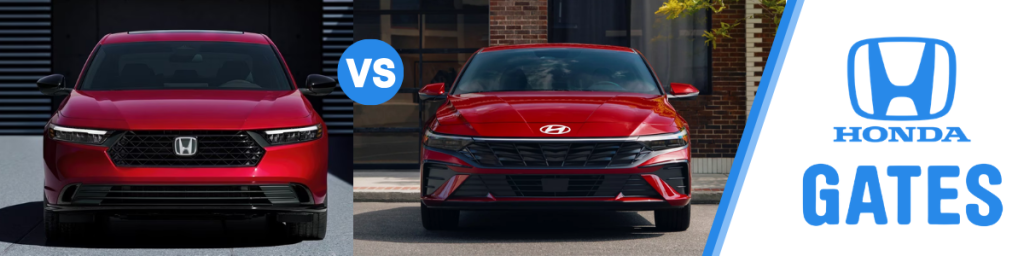
Honda-vs-HyunHonda-vs-Hyundai-Reliability-Safety-Performance-Tech-Compareddai-Reliability-Safety-Performance-Tech-Compared

Honda vs Hyundai: Reliability, Safety, Performance & Tech Compared

Sizing Up Honda and Hyundai for Your Next Daily Driver Walk through any parking lot in Kentucky, and you'll spot plenty of Hondas and Hyundais. Both brands have earned loyal fans, but they take pretty different approaches to building cars. If you're weighing one against the other, the details under the hood and inside the cabin tell a story worth hearing. Honda still holds a slight edge in long-term mechanical durability and lower yearly repair bills. Hyundai counters with a 10-year/100,000-mile powertrain warranty, the longest in the non-luxury class. Both brands earn high marks from IIHS and NHTSA, with driver-assist suites that overlap on most features. How Each Brand Holds Up Over Time Reliability is where most shoppers start, and the numbers paint a clear picture. Auto Reliability Index recently scored Honda at 73 out of 100 across nine tracked models, while Hyundai came in at 68 across eight. Honda owners also pay less for upkeep, around $441 a year on average, compared to $492 for Hyundai. That gap isn't huge, but it adds up over a decade of ownership. Hyundai has closed the distance dramatically over the past 15 years. RepairPal ranks Hyundai fourth out of 32 brands, with a score of 4.0 out of 5.0. Consumer Reports placed Hyundai in the top third of mainstream brands for 2026, with the Tucson, Kona, and Elantra leading the pack. Honda still pulls ahead in J.D. Power's compact SUV category, where the CR-V scored 83 out of 100 for 2026, though a handful of rivals topped it this year. Safety Suites Side by Side Honda Sensing and Hyundai SmartSense cover the same ground in broad strokes. Both bundle automatic emergency braking, lane keeping assist, adaptive cruise control, and driver attention warnings. Honda has been expanding its Sensing suite with sharper sensors and faster processing for 2026, which helps with detection and response on models like the CR-V and Civic. Hyundai's SmartSense package leans hard on pedestrian and rear cross-traffic detection, with Forward Collision-Avoidance Assist that has earned praise for catching motorcycles and smaller vehicles. Several Honda and Hyundai models picked up IIHS Top Safety Pick or Top Safety Pick+ awards this year. If safety tech sits at the top of your list, you'll find what you need from either brand. Engine Choices and Driving Feel Honda builds its reputation on naturally aspirated engines and conservative turbocharging. That approach keeps things simple, which translates to fewer repairs and easier maintenance down the road. The 2026 Civic Si and Type R still satisfy enthusiasts, while the CR-V Hybrid earned strong reliability scores this year from Consumer Reports. Hyundai goes harder on turbocharged powertrains and offers a wider EV and hybrid roster. The Ioniq 5 N has become a benchmark for performance EVs, and the Elantra N stays a favorite among drivers who want a small sports sedan without paying luxury prices. So, which is better, Honda or Hyundai? That answer depends on what you value most behind the wheel. Side-by-Side Numbers Category Honda Hyundai Reliability Score (Auto Reliability Index) 73/100 68/100 Avg. Annual Maintenance $441 $492 Powertrain Warranty 5 yr / 60,000 mi 10 yr / 100,000 mi Driver-Assist Suite Honda Sensing Hyundai SmartSense 2026 Compact SUV (J.D. Power) CR-V (83/100) Tucson (83/100) Hybrid / EV Lineup CR-V, Accord, Civic, Prologue Ioniq 5/6/9, Tucson, Santa Fe Tech and Cabin Features Hyundai often packs more standard tech at lower price points. Heated front seats, wireless phone charging, and dual-screen displays show up earlier in the trim ladder than they do on most Honda models. Bluelink connected services let owners start their car, check fuel levels, or push directions to the car from a phone. Honda counters with cleaner interfaces and Google built-in on most 2026 models, which means built-in Google Maps, Google Assistant, and app downloads through Google Play. HondaLink covers remote start and vehicle health alerts. Some shoppers prefer Honda's quieter design, while others go for Hyundai's bolder approach. Picking the Brand That Fits Your Life If you keep cars for 150,000 miles or more and want lower repair costs along the way, Honda's track record makes a strong argument. If you'd rather have a longer warranty and more standard features for the money, Hyundai gives you plenty to like. Both are quality picks. The right choice usually comes down to driving feel, budget, and how long you plan to keep the keys. Test Drive a New Honda at Gates Honda We've been helping Kentucky drivers find the right vehicle for over 100 years, and we know how much research goes into a purchase this size. Stop by Gates Honda in Richmond, and we'll line up back-to-back drives in the Honda models you're weighing against any Hyundai on your list. Our team can walk you through Honda Sensing features, run the numbers on financing, and answer every question without any pressure. Whether you're set on a CR-V or still sorting through your options, we want to help you drive home in a Honda you love.