
Blog

2026 Honda Ridgeline vs Ford Maverick: Specs, Towing, MPG & Price Compared

2026-Honda-Ridgeline-vs-Ford-Maverick-Specs-Towing-MPG-Price-Compared

Two Completely Different Approaches to the Same Question

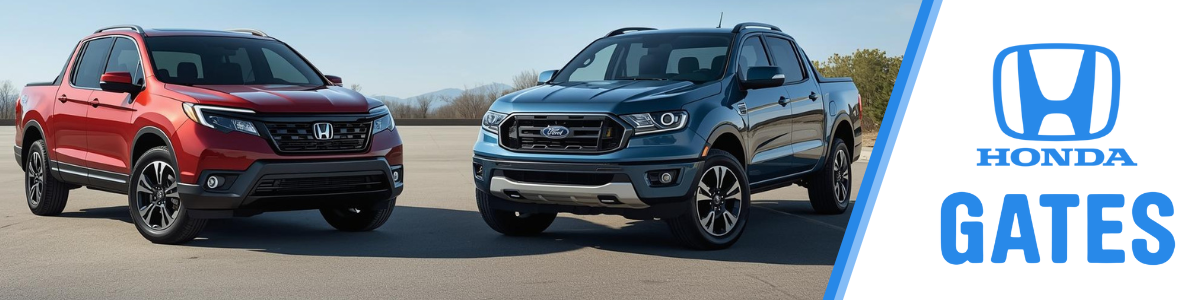
Put a midsize SUV-based truck next to a compact hybrid workhorse and you'll see just how wide the truck market has become. The Honda Ridgeline and Ford Maverick both have beds and four doors, but that's about where the similarities end. Honda built the Ridgeline for families who occasionally need truck capability. Ford designed the Maverick for people who want a truck without paying for one at the pump or the dealership.

  • The Ridgeline delivers 280 horsepower and 5,000 pounds of towing capacity with a smooth V6 and SUV-level comfort. Base price starts around $40,595.
  • The Maverick comes standard with a 191-hp hybrid that hits 42 city mpg, or you can grab the optional 250-hp turbo four-cylinder. Either way, you're starting at $28,145.
  • Bed size matters here. The Ridgeline's 5.3-foot bed includes a lockable in-bed trunk that doubles as a cooler. The Maverick's 4.5-foot bed is tighter but functional for most weekend projects.

Quick Reference Comparison

Specs2026 Honda Ridgeline2025 Ford Maverick
Starting Price$40,595 (Sport)$28,145 (XL Hybrid)
Engine Options280-hp 3.5L V6 (only)191-hp 2.5L Hybrid or 250-hp 2.0L Turbo
Towing Capacity5,000 lbs4,000 lbs (with 4K package)
Fuel Economy18 city / 24 hwy mpg42/35 mpg (hybrid) or 22/30 mpg (turbo)
Bed Length5.3 feet4.5 feet
Payload Capacity~1,600 lbs1,500 lbs
Drive ConfigurationAWD standardFWD standard, AWD available

Power and Performance: V6 Muscle vs Hybrid Efficiency.

Honda keeps things simple. Every Ridgeline comes with a 3.5-liter V6 making 280 horsepower and 262 lb-ft of torque, paired with a 9-speed automatic. It's got plenty of punch and feels smooth around town. All-wheel drive comes standard. Ford gives you options. The base hybrid pairs a 2.5-liter engine with an electric motor for 191 combined horsepower. The instant electric torque makes city driving feel livelier than you'd expect. Want more? The optional 2.0-liter EcoBoost turbo delivers 250 horsepower.

Towing and Hauling: Who Pulls More Weight?

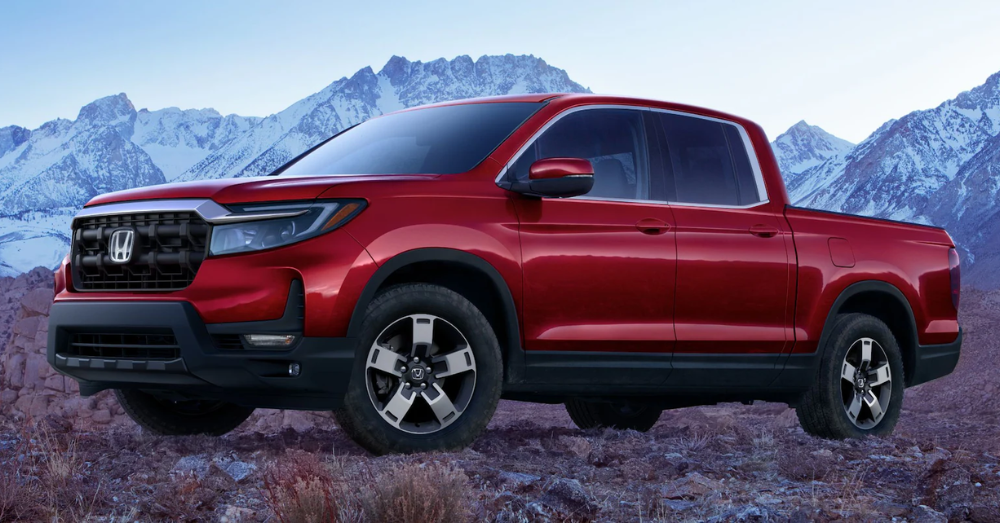
The Ridgeline maxes out at 5,000 pounds. That's enough for a boat, ATVs, or a camping trailer. The 5.3-foot bed beats the Maverick on space, and Honda added a dual-action tailgate that swings out or drops down. The real genius? A 7.3-cubic-foot lockable trunk under the bed floor with a drain plug so you can use it as a cooler. The Maverick caps out at 4,000 pounds with the optional 4K package. You're giving up 1,000 pounds of towing, and the 4.5-foot bed is cramped. But for weekend projects and hardware store runs, it works.

Fuel Economy: Where the Maverick Dominates

Here's where the 2026 Honda Ridgeline vs Ford Maverick debate tilts hard in Ford's direction. The Ridgeline gets 18 mpg city and 24 mpg highway. The Maverick hybrid? Try 42 city and 35 highway with front-wheel drive, or 40 city and 33 highway with all-wheel drive. That beats most sedans. Even the turbocharged EcoBoost gets 22 city and 30 highway. Your daily commute will cost a lot less with the Maverick.

Price: $12,000 Buys You More Truck

The 2026 Honda Ridgeline starts at $40,595 and tops out at $47,695 for the Black Edition Two-Tone. The 2025 Ford Maverick undercuts that by more than twelve grand, starting at $28,145 for the base XL hybrid. The XLT runs around $30,645, the loaded Lariat hybrid sits around $38,440, and the off-road Tremor tops out near $40,995. That's still less than a base Ridgeline.
Ride Quality and Cabin Space

Honda built the Ridgeline on the same platform as the Pilot SUV, so it drives more like a crossover than a traditional truck. The ride is smooth, the cabin stays quiet, and there's real room for adults in the back. The Maverick's cabin is tighter but comfortable for daily use. Every trim gets a 13.2-inch touchscreen with wireless Apple CarPlay and Android Auto. The ride is firmer, especially with the turbo and sport suspension, but not harsh.

Which Truck Fits Your Needs?

The Ridgeline costs more, but you're paying for better towing, more space, and family-vehicle comfort. The Maverick wins on fuel economy and price. That hybrid powertrain makes it one of the smartest truck buys available, and the $12,000 savings leave room for options or can just stay in your wallet.

Test Drive the Ridgeline in Richmond

Curious about the Ridgeline? We stock the full lineup at Gates Honda in Richmond. Stop by to see that in-bed trunk, test the dual-action tailgate, and feel how the V6 pulls. Our team can break down trim differences, towing specs, and current deals. We've been helping Central Kentucky drivers for over a hundred years, so we know what works for families around Lexington, Berea, and Winchester. Come take one for a spin.

Recommended Posts

Leasing-vs-Buying-a-Honda-in-Kentucky-The-Real-Math

Leasing vs. Buying a Honda in Kentucky: The Real Math

What a Lease Really Costs in Kentucky Compared to Buying Kentucky drivers face a lease or buy question that national articles never quite answer. This state taxes cars in its own way. Those rules can swing the math by hundreds or even thousands of dollars. Before you sign anything on a new Honda, it pays to know exactly where that money goes. Kentucky charges a 6% usage tax on the full price when you buy, but a lease spreads that tax across your monthly payments. Every driver in the state pays a yearly vehicle property tax, and that bill lands on you whether you lease or own. Buying wins on long-term cost and mileage freedom. Leasing wins on payment size and warranty coverage. Leasing vs. Buying a Car Starts With the Tax Bill Most articles about leasing vs. buying a car skip straight to the monthly payment. In Kentucky, the smarter place to start is the tax line. Buy a car here, and you'll pay a 6% usage tax on the full retail price when you register it with the county clerk. On a $35,000 Honda, that works out to $2,100 due right up front. Lease that same car, and the math changes. Kentucky's U-Drive-It program lets lease companies pay the 6% tax on your monthly payments instead of the full sticker price. Say your lease payment runs $450 a month. The tax adds about $27 to each payment, totaling roughly $972 over a 36-month term. That's less than half the tax a buyer pays. Why? You only get taxed on the part of the car you use. Leasing vs. Buying at a Glance Factor Leasing Buying Monthly payment Lower, since you cover depreciation plus interest Higher, since you cover the full vehicle price Kentucky 6% usage tax Paid a little at a time on each monthly payment Paid up front on the full purchase price Annual KY property tax You pay it as the driver, even though the lease company holds the title You pay it each year as the titled owner End of the term Return the car, buy it out, or start a fresh lease The car is yours once the loan is paid off Mileage Caps usually run 10,000 to 15,000 miles per year Drive as far as you want with zero penalties Wear and tear Fees apply for damage past normal use at turn-in Wear affects resale price, with no turn-in fees Warranty Factory coverage usually lasts the whole lease Coverage ends while you still own the vehicle Long-term cost Payments continue for as long as you keep leasing Costs drop sharply once the loan is paid off The Yearly Property Tax Both Sides Owe Kentucky also charges a yearly property tax on every car, and you pay it when you renew your tags. The state portion is 45 cents per $100 of your car's value. County and city rates get added on top. That bill still comes to you even if you lease. The lease company may hold the title, but the tax lands with the person driving the car. So while the usage tax favors leasing, the property tax treats both paths the same. When the Lease Math Wins Leasing a car vs. buying it outright makes the most sense for drivers who like a new car every few years and keep their mileage modest. Your payment stays lower. The factory warranty usually covers the whole term. Kentucky's payment-based tax setup keeps more cash in your pocket during those first three years, too. Repair bills rarely enter the picture at all. When Buying Pulls Ahead Owning rewards patience. Once the loan ends, your only regular costs are fuel, insurance, upkeep, and that yearly property tax, which shrinks as the car loses value. Drive 20,000 miles a year commuting between Richmond and Lexington? You'll blow past lease caps fast, and extra mileage fees add up quickly. One more Kentucky wrinkle applies if you buy out your lease later. The county clerk collects 6% tax again on the buyout price, so you get taxed twice on the same car. Plan to keep a car past year five? Buying from day one almost always wins. Running Your Own Numbers Before You Sign The right call on buying vs. leasing comes down to how long you keep cars and how far you drive them. Add up the tax, the payments, and the miles you put on your current car over the past year. Short-term drivers with steady mileage save real money leasing in Kentucky. Long-haul owners build equity and escape the payment cycle for good. Either way, run the full math, taxes included, before you commit. Why Buy or Lease Your Next Honda at Gates Honda At Gates Honda in Richmond, we walk shoppers through both sides of this choice every single day. Our financing team earned Honda's Council of Excellence Award for going above and beyond for customers. We'll gladly break down the Kentucky tax math on any Civic, CR-V, Accord, or Pilot you're eyeing. We work with drivers of all credit backgrounds, and our Honda specials often include lease deals and low-interest financing that tilt the numbers even further your way. Stop by our showroom or browse our inventory online. We'll help you find the path that fits your budget and your driving habits.

2026-Honda-Pilot-vs-Toyota-Highlander-Two-Family-Favorites-One-Clear-Winner

2026 Honda Pilot vs. Toyota Highlander: Two Family Favorites. One Clear Winner.

Two Family Haulers Go Head to Head for Your Garage Shopping for a three-row SUV that hauls the whole crew without feeling like a school bus? Honda and Toyota both build family rigs that land near the top of most shopping lists, and choosing between them comes down to what your household actually needs. This breakdown sorts out where each one wins. Honda's Pilot brings a 285 hp V6, standard seating for eight, and the most cargo room of the pair. Toyota's Highlander counters with a hybrid that hits 35 mpg combined, well past anything the Pilot can match. Honda's lower starting price and larger standard screens hand the Pilot an edge for budget-focused shoppers. How Much Room Do You Actually Get Both SUVs seat a full family, but the Pilot gives you more of nearly everything. It stretches about 200 inches long on a 113.8-inch wheelbase, while the Highlander measures roughly 195 inches on a 112.2-inch wheelbase. That gap shows up most in the cargo hold. Fold the Pilot's seats, and you open up as much as 113.7 cubic feet. The Highlander tops out around 84.3 cubic feet with everything flat. Seating tips Honda's way too. Every Pilot except the TrailSport carries eight people using a second-row bench, and that bench comes standard. The Toyota Highlander seats seven and charges extra for the eighth seat on select trims. For a big family or a carpool rotation, those details pile up quickly. Power, Towing, and How They Drive Pop the hood, and the two take different roads. Honda gives the Pilot a 3.5-liter V6 rated at 285 horsepower and 262 lb-ft of torque, paired with a 10-speed automatic. Front-wheel drive is standard, and Honda's i-VTM4 all-wheel drive is available on lower trims and standard from TrailSport up. Toyota drops the old V6 for a 2.4-liter turbo four making 265 horsepower and 310 lb-ft of torque through an eight-speed automatic. All-wheel drive now comes standard on every 2026 Highlander, so front-drive is no longer an option. That turbo trails the Pilot in horsepower but beats it in torque, which helps low-speed pulling. Both tow up to 5,000 pounds when you spec them right, so weekend boat and camper duty is a tie. Fuel Economy Where Toyota Pulls Ahead Give Toyota this round. Toyota's gas Highlander earns an EPA-estimated 24 mpg combined with its turbo four. Honda's V6 lands at 22 mpg combined with front-wheel drive and 21 with all-wheel drive. Then there's the Highlander Hybrid, which posts 35 mpg combined across its trims. Honda doesn't sell a hybrid Pilot, so if pump savings sit at the top of your list, the hybrid Toyota is hard to argue with. That trade runs the other way on power. Its V6 drinks regular gas and gives you stronger passing muscle with no battery pack to think about. Drivers who tow often or just like the shove of a bigger engine may happily swap a few mpg for it. Where the 2026 Honda Pilot vs. Toyota Highlander Really Splits Tech and money are where this 2026 Honda Pilot vs. Toyota Highlander race turns one-sided. Every Pilot now ships with a 12.3-inch touchscreen, a 10.2-inch digital driver display, and Google built in. Toyota's Highlander opens with a smaller 8-inch screen and a 7-inch gauge display, with the 12.3-inch upgrades saved for pricier trims. Price seals it. Honda's Pilot starts around $42,395 for a front-drive Sport, and you can add all-wheel drive when you want it. Because Toyota made AWD standard and cut the old base trim, the Highlander now starts at nearly $45,870. That's a few thousand more before you option a thing, and you get less standard screen for the money. Trim by Trim Comparison Chart Feature 2026 Honda Pilot 2026 Toyota Highlander Starting MSRP $42,395 (Sport, FWD) $45,870 (XLE, AWD standard) Standard Engine 3.5L V6 2.4L turbo 4-cylinder Horsepower 285 hp 265 hp Torque 262 lb-ft 310 lb-ft Transmission 10-speed automatic 8-speed automatic Drivetrain FWD standard, AWD available AWD standard Hybrid Option Not offered 2.5L hybrid, 243 hp, 35 mpg combined EPA Combined MPG (gas) 22 mpg FWD / 21 mpg AWD 24 mpg AWD Standard Seating 8 7 (8 available) Max Cargo Room Up to 113.7 cu ft Up to 84.3 cu ft Max Towing 5,000 lb (AWD) 5,000 lb (gas) Standard Touchscreen 12.3-inch 8.0-inch (12.3-inch available) Digital Driver Display 10.2-inch standard 7-inch (12.3-inch on Limited, Platinum) Basic Warranty 3 yr / 36,000 mi 3 yr / 36,000 mi Powertrain Warranty 5 yr / 60,000 mi 5 yr / 60,000 mi Honda Pilot Trim Starting MSRP Toyota Highlander Trim Starting MSRP Sport (FWD) $42,395 XLE (Gas) $45,870 Sport (AWD) $44,495 XSE (Gas) $47,940 EX-L (FWD) $44,695 Hybrid XLE $47,620 EX-L (AWD) $46,795 Limited (Gas) $50,325 TrailSport (AWD) $50,595 Hybrid Limited $52,075 Touring (AWD) $51,295 Platinum (Gas) $53,525 Touring Blackout (AWD) $52,495 Hybrid Platinum $55,275 Elite (AWD) $53,695 Black Edition (AWD) $55,195 Why the Pilot Earns the Nod Add it all up, and the Pilot takes the win for most families. It costs less to start, packs more standard tech, seats eight without an upcharge, and swallows more gear. Toyota's Highlander earns real respect for its hybrid and its stingy fuel numbers, and that counts for a lot if your commute runs long. For shoppers who want the most three-row SUV for the money right now, though, the Pilot makes the stronger case. See the 2026 Pilot Up Close at Gates Honda We've helped Central Kentucky families sort through three-row SUVs for generations, and we're happy to walk you through the 2026 Pilot in person. Stop by our Richmond showroom to sit in all three rows, fold the seats, and see how the cargo area handles strollers, sports gear, or a big grocery run. Our team knows every trim from Sport to Black Edition, so we can match the right one to your budget and the way you drive. When you're ready, we'll set up a test drive and let the Pilot speak for itself. Our Honda-certified service crew sticks with you for the long haul, too, keeping your Pilot in top shape long after you drive home.

Trail-Ready-or-Family-Ready-2026-Honda-Passport-vs-Pilot

Trail-Ready or Family-Ready? 2026 Honda Passport vs. Pilot

How the 2026 Honda Passport and Pilot Take Different Roads Two Honda SUVs share a showroom, a V6, and a strong family resemblance, yet they ask you one quick question before you ever turn the key. Do you want room for the whole crew, or grip for the rough stuff? That single answer sorts most shoppers in about thirty seconds. Both SUVs run the same 285-horsepower 3.5L V6 with a 10-speed automatic, so straight-line muscle is basically a wash. The Passport seats five and makes all-wheel drive standard, while the Pilot seats up to eight and starts with front-wheel drive. Pricing opens at $42,395 for the Pilot and $44,950 for the Passport, with both climbing into the mid-$50,000 range up top. One Engine, Two Personalities Pop the hood on either SUV, and you'll find the same heart. Both use a 3.5-liter V6 making 285 horsepower and 262 lb-ft of torque, bolted to a quiet-shifting 10-speed automatic. Towing maxes out at 5,000 pounds on both when properly equipped. The real difference comes down to how that power reaches the road. Every Passport ships with the second-generation i-VTM4 all-wheel-drive system standard. The Pilot is available in front-wheel drive on its Sport and EX-L trims, with AWD available for $2,100 and standard on the rest of the lineup. Five Seats or Eight Here's the biggest fork in the road. The Passport is a two-row, five-seat SUV built around hauling gear, not a third row of passengers. You get 44.0 cubic feet behind the second row and 83.8 with those seats folded flat. The Pilot adds a full third row, seating up to eight (or seven if you pick the TrailSport with its captain's chairs). Cargo runs 18.6 cubic feet behind the third row, 48.5 behind the second, and up to 113.7 with everything down. If your weekends involve kids, carpools, and grandparents, the Pilot's extra row earns its keep fast. Why the Passport Feels Like the Trail Truck Honda built the Passport to wander off the pavement. It rides on 8.3 inches of ground clearance with short bumper overhangs and a 23-degree approach angle. Step up to a TrailSport trim, and you get steel skid plates, 275/60R18 General Grabber all-terrain tires, bright orange recovery points, and seven drive modes, including Trail and Sand. The top TrailSport Elite throws in the TrailWatch multi-angle camera so you can pick a line over rocks without guessing. Anyone weighing the 2026 Honda Passport vs. Pilot for muddy two-track and gravel forest roads will feel the difference the first time the trail gets ugly. The Pilot Plays the Family Card The Pilot answers a different need. Its three rows, stowable second-row center seat, and clever in-trunk storage make daily family life simpler. Front-wheel-drive versions earn an EPA estimate of up to 22 mpg combined, a touch thriftier than the AWD-only Passport's 21 mpg combined. The Pilot also offers more trims, from the value-minded Sport to Touring, Elite, and the blacked-out Black Edition. There's even a Pilot TrailSport for buyers who want a third row and a taste of off-road hardware in one package. Picking a Trim Without Overpaying On the Passport side, the RTL covers the basics with standard AWD, heated seats, and a 12.3-inch touchscreen. The TrailSport trims are the ones to grab if dirt is part of your routine. For the Pilot, a Sport or EX-L gives families plenty of room and tech for the money, the TrailSport handles light trails, and Touring or Elite brings the leather, Bose audio, and head-up display for road-trip comfort. 2026 Honda Passport vs. Pilot Trim Comparison Feature 2026 Honda Passport 2026 Honda Pilot Body style Two-row midsize SUV Three-row midsize SUV Seating 5 7 (TrailSport) or 8 Standard drivetrain AWD on every trim FWD standard, AWD available or standard by trim Engine 3.5L V6 3.5L V6 Horsepower / Torque 285 hp / 262 lb-ft 285 hp / 262 lb-ft Transmission 10-speed automatic 10-speed automatic Max towing 5,000 lb 5,000 lb (AWD) / 3,500 lb (FWD) Ground clearance 8.3 in 7.3 in (8.3 in TrailSport) Cargo behind rear seats 44.0 cu ft (behind 2nd row) 18.6 cu ft (behind 3rd row) Max cargo 83.8 cu ft up to 113.7 cu ft EPA combined 21 mpg (20 TrailSport) up to 22 mpg (FWD) Trim lineup RTL, TrailSport, TrailSport Elite (plus Towing and Blackout variants) Sport, EX-L, TrailSport, Touring, Touring Blackout, Elite, Black Edition Starting MSRP $44,950 $42,395 2026 Honda Passport Trims Trim Drivetrain Seats What You Add EPA Combined Starting MSRP RTL AWD 5 12.3-inch touchscreen, heated front seats, tri-zone climate, power tailgate 21 mpg $44,950 RTL Towing AWD 5 RTL gear plus a factory-integrated Class III trailer hitch 21 mpg $45,650 RTL Blackout AWD 5 Gloss black wheels, black badges, and black lug nuts 21 mpg $46,150 TrailSport AWD 5 Steel skid plates, all-terrain tires, recovery points, panoramic moonroof 20 mpg $48,650 TrailSport Blackout AWD 5 TrailSport hardware paired with blackout exterior styling 20 mpg $49,850 TrailSport Elite AWD 5 Bose audio, TrailWatch cameras, ventilated front seats, heated steering wheel 20 mpg $52,650 TrailSport Elite Blackout AWD 5 Top Passport with every Elite feature plus blackout styling 20 mpg $53,850 2026 Honda Pilot Trims Trim Drivetrain Seats What You Add EPA Combined Starting MSRP Sport FWD (AWD +$2,100) 8 Cloth seats, 12.3-inch touchscreen, tri-zone climate, roof rails, power tailgate 22 mpg (FWD) $42,395 EX-L FWD (AWD +$2,100) 8 Leather-trimmed seats, wireless charger, driver memory, rear sunshades 22 mpg (FWD) $44,695 TrailSport AWD 7 Skid plates, all-terrain tires, full-size spare, captain's chairs, TrailWatch 20 mpg $50,595 Touring AWD 8 Bose audio, panoramic moonroof, hands-free power tailgate, surround-view camera 21 mpg $51,295 Touring Blackout AWD 8 Touring gear plus 20-inch black wheels and black badging 21 mpg $52,495 Elite AWD 8 Head-up display, ventilated front seats, heated 2nd row, rain-sensing wipers 21 mpg $53,695 Black Edition AWD 8 Range-topping luxury with black exterior trim and black leather interior 21 mpg $55,195 Starting prices exclude destination charges, so check with us for current numbers on the trim you want. Matching the Right Honda to Your Driveway The math here is pretty clean. Go with the Passport if your days lean toward gear, dogs, bikes, and trailheads, and you'd rather have grip and clearance than a third row. The Pilot makes more sense if you need seats for everyone and a big cargo hold for the school-run-meets-road-trip life. Both come with Honda Sensing safety tech, the same strong V6, and a 5,000-pound tow rating, so your choice really comes down to the life you're packing. Better yet, drive both back-to-back and let the seats and steering wheel make the call. See Both SUVs Side by Side at Gates Honda Reading specs only gets you so far, which is why we'd love to put you behind the wheel of both at Gates Honda in Richmond. Our team can walk you through, in person, how the Passport's standard all-wheel drive and trail hardware compare to the Pilot's roomy third row, so you can feel the difference instead of guessing. Slide into each one, fold the seats, load up your usual gear, and take a test drive on roads you actually use. Our Honda-certified team is happy to answer trim questions, line up financing, and help you match the right SUV to your weekends. Stop by our showroom or schedule a test drive online whenever you're ready.